Imagine how many words you speak, read and hear each day. Think about how many choices you have in terms of deciding what you want to say and why and the images that your words can paint. Think about the impact that nuance, tone and irony can have on the words you deliver and the way that they are received by others. Consider how may words have multiple meaning based on culture, region or slang. Now imagine that the leader of your society limited those words more and more each year (only 500 words allowed) and put strict rules in place for the language you could speak, the tone you use and the images they evoke. Crazy, right?
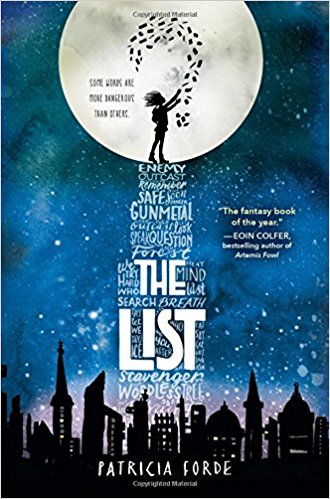
This is exactly the premise of Patricia Forde’s brilliant new YA book The List. Part apocalyptic/dystopian novel and part social commentary about courage, morals and the power of words, I had a very difficult time putting this book down. The story is set in a place called Ark, the surviving society after a catastrophic event called “The Melting” – think worst case scenario climate change impact. Letta, the main character, is the wordsmith’s apprentice and one of the few people “allowed” to know about the full range of language of the past and speak freely. It is her job to write out lists of acceptable words and provide the lists to the people of Ark. John Noa, the leader of Ark, believes that words are the cause of all of humanity’s problems. He decrees that the list of words be cut again and again to the bare minimum required to function as a society. Words including art, hope, love, freedom are all banned and deemed unnecessary. Letta accepts this as simply the way things are until a series of events force her to question Noa’s intentions including the disappearance of Benjamin (the wordsmith) and the appearance of Marlo, a teenage boy who knows about all of the words and is a dissenter living outside of Ark’s society. As the story unfolds, several interactions make her question Noa’s limits on language and the validity of his vision for humanity. The novel is fast paced and engaging as Letta must decide whether to ignore her own values and accept the status quo or face her fears and become part of a revolution.
Most compelling about this story are the parallels between the fictional world of Ark and our own current events – climate change, global warming, narcissistic leadership, the truth behind our words (fake news claims, anyone?), conflicting visions for society and humanity….sound familiar? Letta is just a teenager in the novel but the conflict she faces in both universal and relatable: Who can we trust? What do we do when our leadership if failing us? What are our options to create change? What are we willing to risk to do what we think is right? How far do we go for the people we love? Though the end of the book is satisfying in many ways – these questions and the links to current events today resonate long after the story is over.
*I received an advanced copy of this book from NetGalley in exchange for providing a review.
 Have you Read the One About....?